
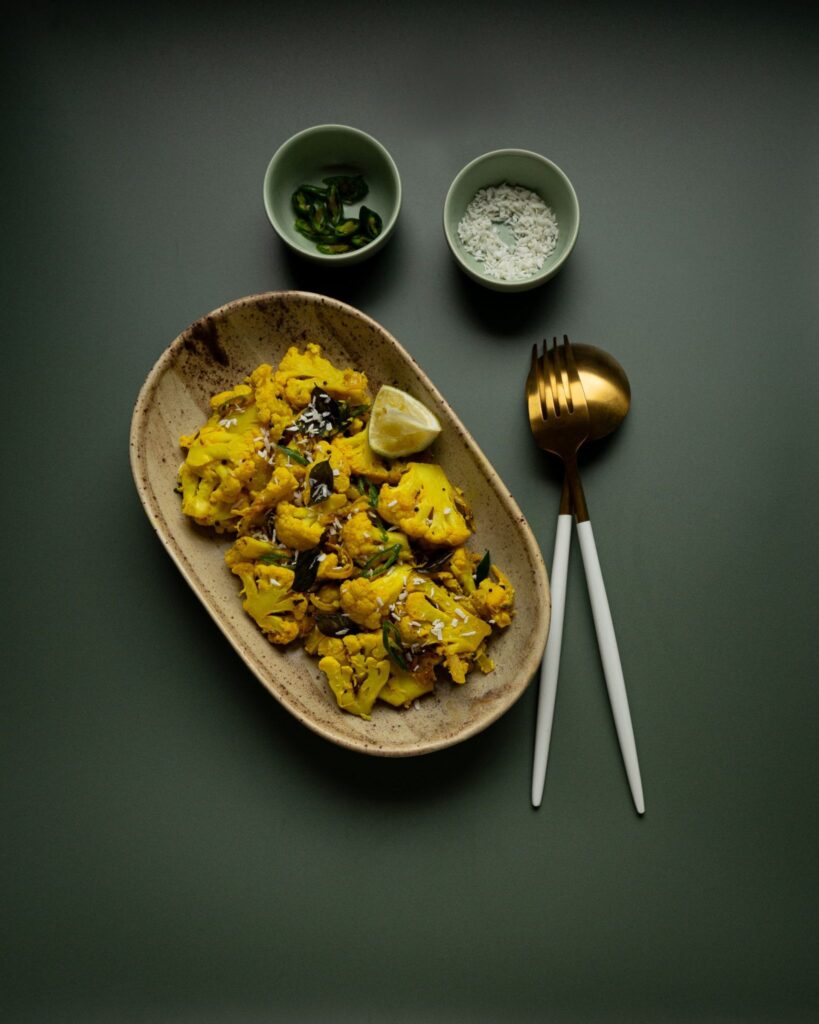
This authentic Sri Lankan recipe for cauliflower mallung is perfect for that spare head of cauliflower you might have lurking in your vegetable box.
This Sri Lankan cauliflower recipe is easy, quick and healthy and will transform your head of cauliflower into something magnificently delicious.
When it comes to Sri Lankan vegetarian food, this authentic recipe for cauliflower mallung is easy to make. The spices cling to the crevices of each cauliflower floret giving this dish an incredible depth of flavour.
A home-style authentic Sri Lankan recipe for cauliflower.
When I headed home to visit my parents for a regular helping Sri Lankan curry. They always served up a vegetable mallung. The mallung added freshness and bite and helped cut through the rich, spice-laden meat dishes my parents loved to cook.
There are variations of this recipe from across Sri Lanka and India. Mallung, mallum, thoran or poriyal are dry vegetable curries, stir-fried in spices with onion and laced with coconut.
Rambutan, the Sri Lankan restaurant near Borough Market does a rather lovely mutton poriyal. So not limited to vegetables.
Serve one or two mallungs are often served with a meal. A meal, as simple as dry vegetable curry, dhal, rice or roti and perhaps a sambol.
Traditional Sri Lankan recipes for mallung are versatile. Leafy green vegetables such as kale and cabbage make excellent mallungs. This recipe works brilliantly with cauliflower or broccoli. And believe it or not, Brussels sprouts. Sprouts are finely sliced with a mandolin. I assure you, any sprout hater will become a sprout lover when they taste sprouts cooked the Sri Lankan way!
What’s the secret to an authentic Sri Lankan cauliflower malling?
The secret to getting this authentic recipe for Sri Lankan cauliflower mallung right? It’s about getting your onions soft, browning at the edges, to exude their natural sweetness.
Now the controversial bit. Fish.
I always add Maldive fish to my mallungs. The Maldive fish adds an umami quality giving the dish another layer of flavour. I’ve yet to find a vegetarian or vegan alternative. To make this a plant-based recipe skip the fish.
You’ll find Maldive fish in Sri Lankan grocery stores or online in stores like the Asian Cook Shop.
What should you eat with it?
I think a great meal would be a creamy beetroot curry and a simple dhal with some plain boiled rice. This would be the perfect plate of food.
Why two chillis?
I’ve had people ask why there is a second chilli added at the end of this recipe. The base flavour for this recipe comes from tempering; a well-known technique in South Asian cooking. The spices, onion, chilli and curry leaves are added to hot oil to release their fragrance and flavour. I add the second chilli at the end, with the coconut and lime; this lifts the dish’s flavour and acts as a garnish.